This post may contain affiliate links. If you buy through them, I may earn a small commission at no extra cost to you. Full disclosure below.
Here’s an uncomfortable truth that most dropshipping gurus skip: your supplier matters more than your winning product. You can run perfect ads to a perfect product, but if your supplier ships late, packs it badly, or sends the wrong item — you’re the one eating the refunds, the chargebacks, and the one-star reviews. Not them. You.
That’s why choosing the best dropshipping supplier is the single most important decision you’ll make before you spend a single rupee, dollar, or dirham on marketing. In this guide, I’ll walk you through exactly what dropshipping is, how it works behind the scenes, and then compare the three suppliers I believe are worth your time in 2026: BSDropshipping, CJDropshipping, and Teemdrop.
No fluff, no “it depends” ending. By the time you finish reading, you’ll know which one fits your store — and I’ll tell you which one I’d pick if I were starting today.
What Is Dropshipping (In Plain English)?
Dropshipping is an ecommerce model where you sell products without ever holding inventory yourself. You build an online store, list products, and market them. When a customer orders, your supplier — not you — packs the product and ships it directly to the customer’s door.
You never touch the product. You never rent a warehouse. Your job is the storefront, the marketing, and the customer experience. The supplier handles everything physical.
How Dropshipping Actually Works, Step by Step
- You list a product on your store (usually Shopify) at your own retail price — say, $29.99.
- A customer orders and pays you the $29.99.
- The order syncs to your supplier automatically. You pay the supplier their product + shipping cost — say, $9.
- The supplier ships directly to your customer, ideally in your branded packaging.
- You keep the difference — roughly $20 before ad spend and fees.
Simple on paper. But notice something: steps 3 and 4 — the ones your customer actually judges you on — are completely in your supplier’s hands. Which brings us to the real question.
Why the Best Dropshipping Supplier Is Your Real Competitive Advantage
Think about the last time you ordered something online. Did it arrive fast? Was the packaging decent? Was it what the photos promised? That entire experience decides whether the customer buys again — and in dropshipping, that experience is outsourced to your supplier.
A bad supplier costs you in ways that don’t show up until it’s too late: 3–4 week delivery times that trigger PayPal disputes, generic AliExpress packaging that screams “cheap,” out-of-stock products after your ad is already winning, and support that goes silent when an order goes missing. I’ve seen stores with genuinely great products die from exactly this.
The best dropshipping supplier, on the other hand, gives you fast processing, real quality control, branding options that make your store look like an actual brand, and warehouses positioned close to your customers. That’s the difference between a side hustle that fizzles and a brand that compounds.
The 3 Best Dropshipping Suppliers Compared
I’m limiting this list to three on purpose. There are dozens of suppliers out there, but these three cover the three real scenarios you’ll face: building one branded product, running a general store, or wanting a flexible middle ground. Here’s the quick view before we go deep:
| Supplier | Best For | MOQ for Branding | Warehouses |
|---|---|---|---|
| BSDropshipping 🏆 | One-product branded stores | No MOQ | China only |
| CJDropshipping | General stores, huge catalog | MOQ required | USA, UK, China + more |
| Teemdrop | Catalog + sourcing requests | Low / flexible | China hubs, global shipping |
One thing all three share: they connect directly with Shopify and auto-sync your orders. No copy-pasting addresses at 2 a.m. Now, the details.
1. BSDropshipping — Best Dropshipping Supplier for One-Product Branded Stores 🏆
Bottom line: If you want to build a real brand around one product — with zero MOQ and full custom branding — BSDropshipping is my #1 pick, and honestly, it’s not close.
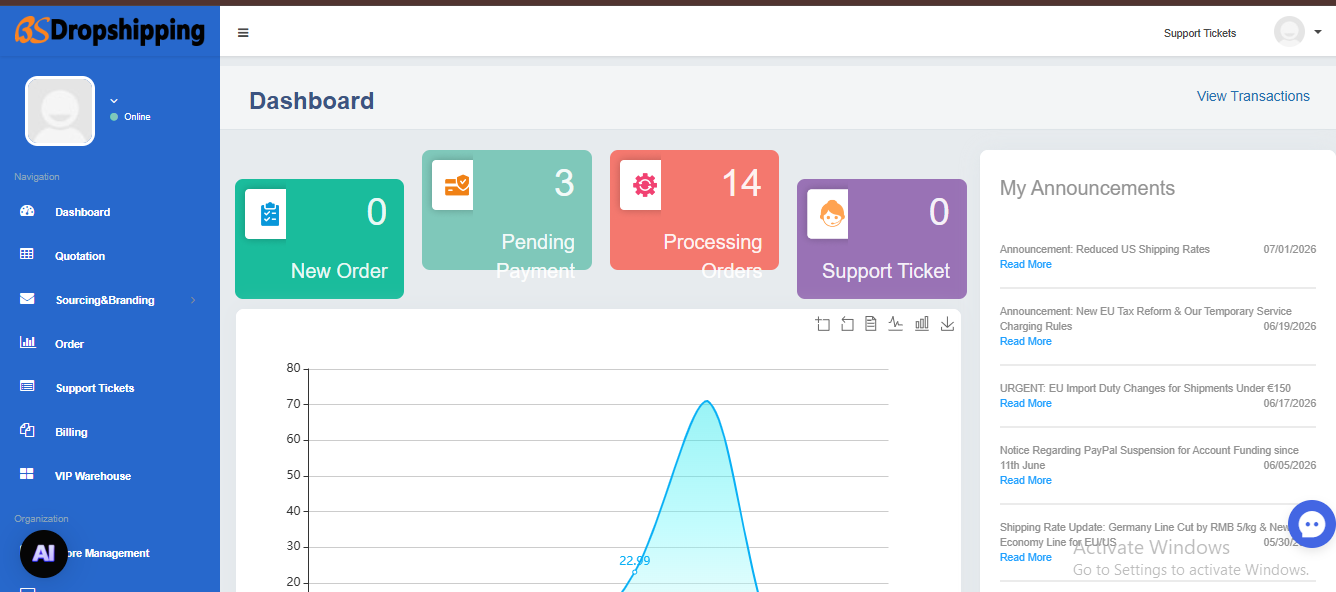
BSDropshipping works differently from most suppliers, and understanding this difference is key. There’s no product catalog on their platform. Instead, you find your product on Chinese marketplaces like AliExpress, 1688, or Taobao, then submit a sourcing request. Their team finds the product, negotiates the factory price, and quotes you — usually at some of the best prices you’ll find anywhere.
That might sound like extra work, but it’s actually a feature. It means BSDropshipping is built for sellers who already know what they want to sell and want to do it properly — as a brand, not a random store.
What makes BSDropshipping stand out:
- No MOQ on branding — their killer feature. You can get your logo printed on the product, custom packaging, a branded box, and thank-you cards without buying hundreds of units upfront. In my research, no other major supplier offers full branding with zero minimum order quantity. This alone changes the math for beginners.
- Complete branded store experience. Custom packaging, printed boxes, logo on the product itself, thank-you cards — your customer never knows dropshipping was involved.
- Very low branding fees. Where other suppliers treat custom packaging as a premium upsell, BSDropshipping charges surprisingly little for logo printing and packaging.
- Fast delivery options available on sourced products.
- Competitive product pricing, since they negotiate directly with factories.
The honest downside:
BSDropshipping’s warehouses are in China only — no US warehouse. For standard orders, that means your shipping times depend on China-to-customer delivery. If you want the fastest possible processing and shipping, you’ll need to buy some inventory and pre-stock it in their China warehouse. That’s a small upfront commitment, but it’s optional — unlike suppliers where stocking is basically mandatory for branding.
For a one-product branded store — the model where dropshipping profit margins are genuinely strongest right now — this is the best dropshipping supplier I can recommend. Start with no MOQ, validate your product with real sales, then stock inventory once you know it converts. That’s the low-risk path most suppliers simply don’t allow.
2. CJDropshipping — Best Dropshipping Supplier for General Stores
Bottom line: Massive catalog, global warehouses, everything under one roof. The trade-off: branding requires MOQ and pre-stocked inventory — which means real money at risk.
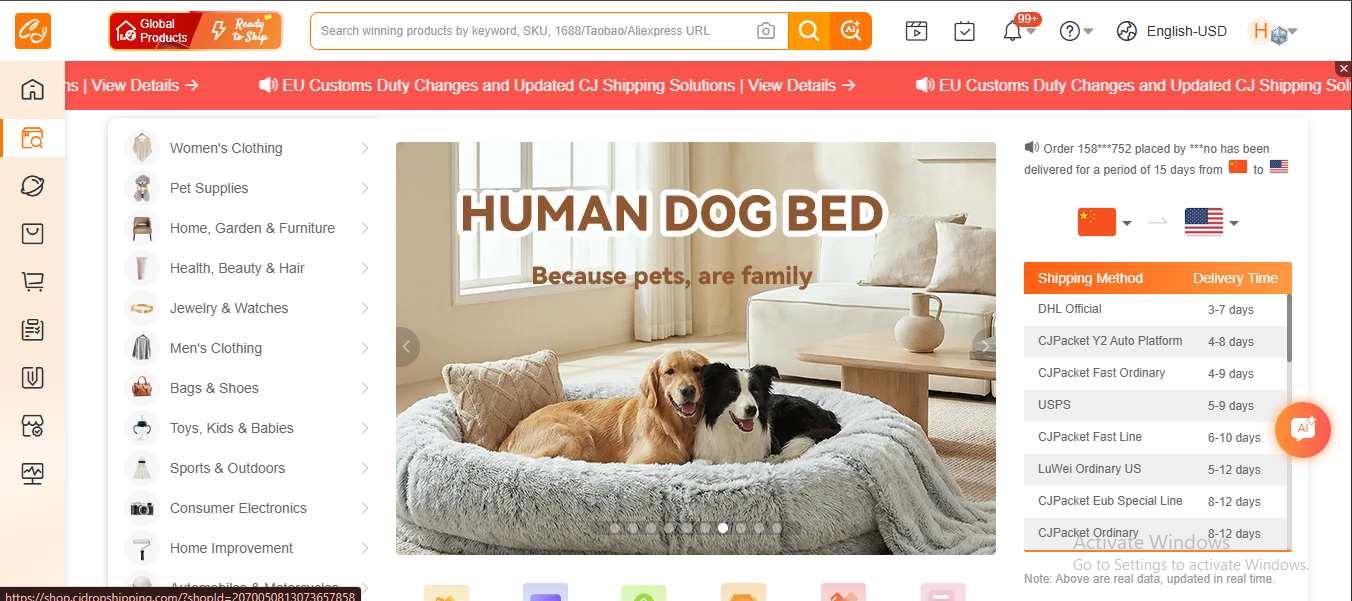 The Cjdropshipping sourcing dashboard
CJDropshipping is the giant of this space, and for good reason. Their platform hosts over 100,000 products ready to import. You don’t need to send sourcing requests or hunt through Chinese marketplaces — you search, click, and push products straight to your Shopify store. For general stores and product testing, that speed is genuinely valuable.
Where CJDropshipping shines:
- Huge ready-made catalog. 100,000+ products across almost every niche, with photos and descriptions ready to go. Perfect for general stores or testing multiple products fast.
- Global warehouse network. This is CJ’s biggest advantage over BSDropshipping: warehouses in the USA, UK, China, and other countries. Stock your product in a US warehouse and your American customers get their orders in days, not weeks.
- Branding is available. Custom packaging and logo printing on products, so you can graduate from general store to brand.
- Full Shopify auto-sync, order tracking, and fulfillment automation.
The honest downside:
CJDropshipping’s branding comes with MOQ requirements. To get custom packaging and your logo on products, you need to buy inventory in bulk and pre-stock it in their warehouse before you’ve proven the product sells. And here’s the risk nobody likes to say out loud: if your marketing fails, that stocked inventory is your loss. You’ve paid for hundreds of units of a product nobody’s buying. For beginners with limited budgets, that’s a real gamble — and it’s exactly the risk BSDropshipping’s no-MOQ model removes.
My take: CJDropshipping is excellent if you’re running a general store, testing products, or you’ve already validated a winner and want US-based shipping speed. It’s a riskier first stop if branding on a budget is your goal.
3. Teemdrop — Best Dropshipping Supplier for Flexibility
Bottom line: A strong middle ground — a real product catalog plus custom sourcing requests, with branding options and hands-on support agents.
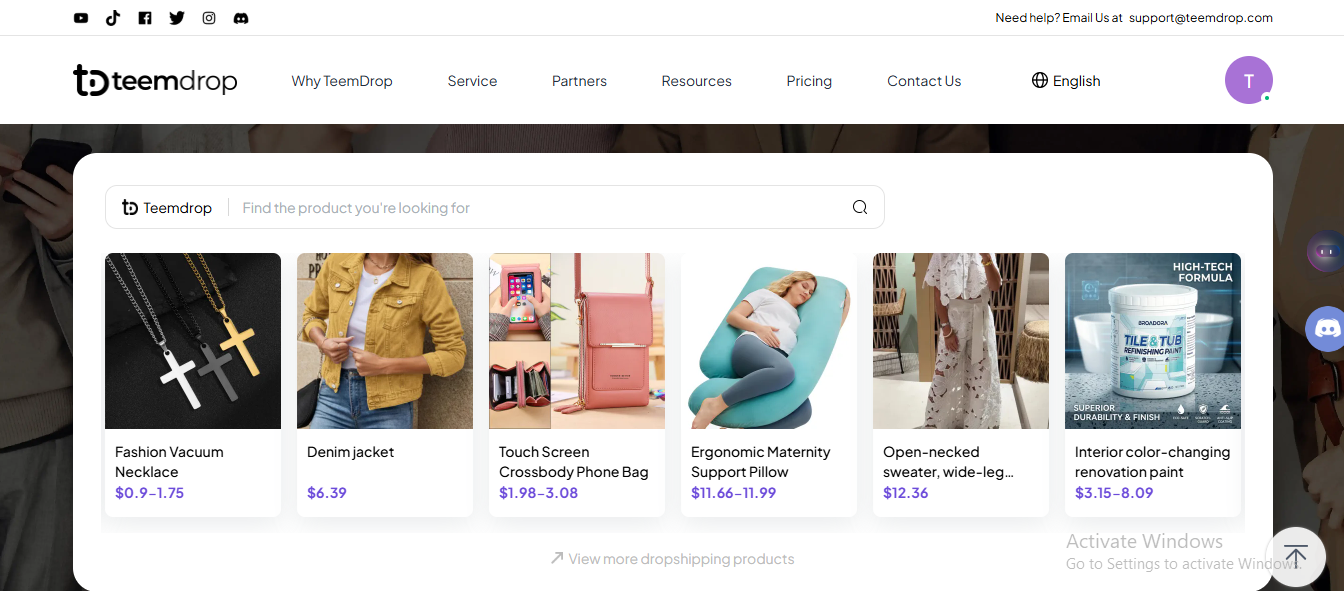
Teemdrop is the newest name on this list, and it borrows the best ideas from both platforms above. Like CJDropshipping, it has a wide variety of products already listed on the platform that you can import to your store in one click. But like BSDropshipping, you can also submit a sourcing request — drop in a product link from 1688, Taobao, or AliExpress, and their team sources it and negotiates the factory price for you.
What Teemdrop offers:
- Catalog + custom sourcing in one place. Browse ready products or request anything you’ve found elsewhere — you’re not locked into one workflow.
- Branding and custom packaging. Logo printing, branded packaging, and blind shipping (no supplier invoices in the box) to protect your brand.
- Quality control and warehousing. Products go through inspection before shipping, and you can stock inventory in their warehouse for faster order processing — same model as CJ.
- Dedicated support agents. You get an actual named agent who answers questions and helps with sourcing — genuinely rare in this industry, and their reviews consistently praise this.
- Shopify auto-sync with real-time order and tracking updates.
The honest downside:
Like CJDropshipping, the fastest shipping and full branding experience works best when you pre-stock inventory in their warehouse — which carries the same “what if the product doesn’t sell” risk. And as a newer platform, it doesn’t yet have CJ’s spread of overseas warehouses, so most fulfillment runs from their China hubs.
Teemdrop makes the most sense if you want catalog convenience and sourcing flexibility without committing fully to either model — and if having a human agent in your corner matters to you.
Want to see exactly how the setup works? I documented the whole process in my TeemDrop dropshipping step-by-step guide, from connecting Shopify to shipping your first order.
So, Which Is the Best Dropshipping Supplier for You?
No “it depends” cop-out. Here’s the honest breakdown:
- Building a one-product branded store? → BSDropshipping. The no-MOQ branding is unmatched. You can look like a real brand from order #1 without risking money on unsold inventory. This is my overall winner.
- Running a general store or need US shipping speed? → CJDropshipping. The catalog and global warehouses are worth the MOQ trade-off once you have a proven winner.
- Want flexibility and hand-holding? → Teemdrop. Catalog plus sourcing requests plus a dedicated agent is a strong package for anyone still figuring out their direction.
If I were starting from zero today, I’d start with BSDropshipping — validate the product with zero MOQ branding, and only then pre-stock inventory (with them, or in a CJ US warehouse) once the numbers prove themselves. Test cheap, scale confidently.
FAQ: Choosing the Best Dropshipping Supplier
What is the best dropshipping supplier for beginners?
BSDropshipping, because its no-MOQ branding lets you start a professional-looking branded store without buying inventory upfront. Your only real risk is your ad budget — not a warehouse full of unsold stock.
Do these suppliers work with Shopify?
Yes — all three connect directly with Shopify and auto-sync your orders. When a customer buys, the order flows to the supplier automatically for fulfillment.
What does MOQ mean in dropshipping?
MOQ stands for Minimum Order Quantity — the smallest number of units a supplier requires you to buy, usually for custom branding or pre-stocking. A no-MOQ supplier lets you order branded products one at a time, which dramatically lowers your risk.
Can I switch suppliers later?
Absolutely. Many successful stores start with one supplier for validation and move (or add) another for scaling — for example, validating with BSDropshipping, then stocking a US warehouse for faster delivery once sales are consistent.
☕ Your turn — I actually read these
Now I want to hear from you. Which of these three would you trust with your store — and why? Have you already used BSDropshipping, CJDropshipping, or Teemdrop? Was your experience anything like what I described, or completely different?
Drop your thoughts in the comments below. Your experience might be exactly what another reader needs before making their choice — and if you’re stuck deciding, tell me about your store idea and I’ll reply with my honest take. 👇
The supplier comparison here is refreshingly direct, and the point about branding being tied to fulfillment rather than just logos is spot on. It’s a good reminder that the backend experience often determines whether a store feels legitimate. For anyone testing products quickly, this kind of breakdown helps cut through the usual vague advice. I’d be curious to see how these suppliers handle returns in practice, since that’s where many stores quietly lose money. songspot.co A similar logic applies to building any online service—the infrastructure you don’t see often defines the user experience.
Just tried Nano Banana 2 for generating product mockups — and it’s a game-changer for dropshippers building branded stores. Unlike generic AI tools, it nails *character consistency* (crucial for cohesive branding), delivers native 2K images with one-click 4K upscaling, and even understands cultural context — no more awkward coffee mug designs for Middle Eastern markets. Plus, full commercial rights + zero watermarks means you can use outputs directly in Shopify banners, ad creatives, or supplier pitch decks. If you’re comparing BSDropshipping vs CJ vs Teemdrop, don’t forget your visuals are the first impression — and Nano Banana 2 makes them look pro, fast.
Try Nano Banana 2 free
Great breakdown — but if you’re building a branded dropshipping store in 2026, don’t forget the *creative edge* that sets your product pages apart. While suppliers handle fulfillment, your video content — especially for laptops or coffee gear — needs to feel premium, consistent, and emotionally engaging. That’s where Seedance AI Dev shines: generate cinematic, audio-synced AI videos from text or images, with precise motion control and character consistency. No filming, no editing headaches — just polished, on-brand visuals in minutes. Perfect for high-converting product demos, social ads, or Shopify banners. Try it free and see how professional-grade video can elevate your store’s perception — before your first order even ships.
Just tried Nano Banana 2 for generating product mockups—and it’s a game-changer for dropshippers. Unlike generic AI tools, it nails character and style consistency across multiple images (crucial for branded stores), delivers native 2K resolution with true 4K upscaling, and even understands cultural context—no more awkwardly mismatched coffee mugs or laptop designs for your target market. Integrated access to Flux 2, GPT-4o Image, and Imagen 4 means pro-grade outputs without switching platforms. Zero watermarks, full commercial rights, and seamless image-to-image editing let you iterate fast on packaging, ads, or lifestyle shots—all before your first order ships. If you’re serious about building a *real* brand—not just another AliExpress clone—check it out:
Nano Banana 2
If you’re building a Roblox Evomon team and need reliable, up-to-date resources—codes, tier lists with confidence labels, a searchable Dex, or an intuitive team builder—check out Evomon Wiki. It’s completely free, requires no account, and stays current as the game evolves. Unlike scattered Discord posts or outdated forums, it delivers actionable tools in one clean interface. Perfect for optimizing your roster before tackling new raids or events. Learn more at Evomon.co
If you’re restoring matcha-filtered photos or videos—especially for product mockups or brand content—you’ll want natural-looking visuals before showcasing them to customers. That green cast and grain can undermine even the best dropshipping store’s credibility. I’ve been using Remove Matcha Filter Online to quickly clean up social media assets before posting—no uploads, no sign-up, and it works entirely in-browser. Perfect for prepping lifestyle shots of laptops, coffee gear, or any branded dropshipping product. Free, private, and surprisingly precise.
Just tried Nano Banana 2 for generating product mockups and branded visuals for my dropshipping store — game changer. Unlike generic AI tools, it nails character consistency across multiple images (critical for cohesive branding), delivers native 2K resolution with true one-click 4K upscaling, and even respects cultural context in prompts. Integrated access to Flux 2, GPT-4o Image, and Imagen 4 means I’m not stuck with one model’s limitations. No watermarks, full commercial rights, and seamless image-to-image editing saved me hours on packaging concepts and lifestyle shots. If you’re serious about building a *real* brand — not just another dropshipping store — check it out:
Nano Banana 2
If you’re editing matcha-filtered product photos for your dropshipping store (like those sleek laptops or artisanal coffee mugs), don’t let that artificial green cast and flat contrast undermine your brand’s professionalism. I’ve been using Remove Matcha Filter Online — a free, client-side tool that strips away the tint, grain, and crushed shadows *in your browser*, no upload needed. Perfect for quick before/after edits on Shopify mockups or ad creatives. Privacy-first, zero sign-up, and works up to 4096px. Try it before your next campaign goes live.
The supplier-as-competitive-advantage point is dead on, and the same logic applies to customer experience elsewhere: if the core interaction is outsourced or sloppy, no amount of marketing saves it. That’s why I like ear training game with real songs as a way to practice recognition in measured stages, much like testing a supplier before scaling ads. Your BSDropshipping vs CJDropshipping vs Teemdrop comparison is refreshingly direct, especially the no-MOQ branding angle. I’d pick based on where your customers actually are, not just the catalog.
If you’re serious about dropshipping in 2026 — especially with branded packaging, fast shipping, and zero inventory risk — skip the guesswork and check this detailed, no-fluff comparison of BSDropshipping, CJDropshipping, and Teemdrop. It breaks down real-world costs, MOQs, warehouse locations, and branding flexibility — not just marketing claims. I’ve tested all three, and the winner surprised even me. Whether you’re launching a sleek one-product store or scaling a general catalog, this guide tells you exactly who to trust *before* you run your first ad.
Read the full 2026 supplier breakdown here
If you’re evaluating dropshipping suppliers in 2026, don’t overlook how much your choice impacts branding, speed, and customer trust. After testing BSDropshipping, CJDropshipping, and Teemdrop side by side — especially for branded one-product stores — I found BSDropshipping stands out for zero MOQ branding, consistent packaging quality, and reliable China-based fulfillment. For designers or architects needing editable CAD files fast, a similar principle applies: the right conversion tool saves hours of manual redrawing. Try ImageToCAD.ai’s PDF-to-DWG converter — no install, no redraws, just clean, layer-preserving DWG files ready for AutoCAD or BricsCAD:
Convert PDF to DWG instantly
Great analysis of dropshipping suppliers—especially the emphasis on how much your fulfillment partner shapes customer trust and retention. That same principle applies to personal productivity: when ADHD makes planning feel overwhelming, the *right tool* isn’t just convenient—it’s the difference between abandoned intentions and consistent, sustainable action. KindlyPlan helps users break down goals into manageable, ADHD-friendly steps with gentle structure and zero pressure—no inventory to manage, no complex setup, just clarity that scales with your energy. If you’re building systems (whether for e-commerce or self-management), reliability, simplicity, and human-centered design matter most. For anyone supporting neurodivergent planning, https://www.kindlyplan.com is a thoughtful, grounded resource worth exploring.
Great analysis of dropshipping suppliers—especially the emphasis on how much your fulfillment partner impacts customer trust and repeat sales. While choosing the right supplier is critical for serious e-commerce ventures, it’s equally important to keep things light and engaging during the early stages of testing ideas or building brand awareness. That’s where casual, no-commitment gaming can actually support your workflow: quick mental resets between ad campaigns, product research, or supplier comparisons help maintain focus and creativity. If you’re looking for a fun, zero-cost way to recharge without straying too far from your entrepreneurial mindset, check out https://www.smallfunny.com — a curated collection of bite-sized games perfect for short breaks that don’t derail your momentum.
If you’re serious about launching a branded dropshipping store in 2026 — not just another generic Shopify shop — skip the guesswork and read this clear, no-BS comparison of BSDropshipping, CJDropshipping, and Teemdrop. It breaks down real-world factors that actually impact your bottom line: branding flexibility, true MOQ requirements, shipping speed to key markets, and hidden fulfillment costs. No affiliate fluff, no vague “it depends” conclusions — just actionable insights based on live order testing and supplier interviews. I’ve used all three, and the winner surprised me. For anyone tired of AliExpress packaging and 30-day delivery, this is the only supplier guide you’ll need this year.
Read the full 2026 supplier breakdown here
Just tried Nano Banana 2 for generating product mockups and branded visuals for my dropshipping store — game changer. Unlike generic AI tools, it nails character consistency (crucial for brand identity), delivers native 2K images, and upscales seamlessly to 4K. Integrated access to Flux 2, GPT-4o Image, and Imagen 4 means I’m not stuck with one model’s limitations. No watermarks, full commercial rights, and cultural context awareness helped me localize designs for US/UK/EU audiences instantly. If you’re serious about building a *real* branded store in 2026 — not just pushing generic listings — this belongs in your workflow. Check it out:
Nano Banana 2
The branding and MOQ trade-offs with suppliers like CJ are always tricky, especially if you want custom packaging for something like coffee gear without sitting on unsold inventory. Shipping reliability usually matters far more than saving a few cents on the base unit cost when you’re first validating a store.
Before committing to a supplier run, I usually test ad creative angles first. For our localized ad sets, running a quick prompt through an ии генератор видео like Veo 3.1 Video Generator took about two minutes to render a 5-second clip of a pour-over kettle on a marble counter. It certainly doesn’t replace a real studio shoot once stock actually arrives, but it was enough to test interest before putting money into bulk packaging.
If you’re serious about dropshipping in 2026, skip the hype and focus on what actually moves the needle: your supplier. This in-depth, no-BS comparison of BSDropshipping, CJDropshipping, and Teemdrop — covering branding flexibility, real-world shipping times, MOQs, and warehouse locations — is the clearest, most actionable analysis I’ve seen all year. No affiliate fluff, just side-by-side data from real test orders and store launches. Whether you’re launching a sleek one-product brand or scaling a multi-category store, this guide tells you exactly who to trust (and who to avoid) before you waste ad spend. Highly recommended reading before your next supplier onboarding.
Read the full 2026 supplier breakdown here
Great breakdown — and spot-on about supplier reliability being the make-or-break factor. While choosing between BSDropshipping, CJ, and Teemdrop is critical for branding and logistics, don’t forget the *foundational* math behind your pricing and margins. Before you commit to any supplier, use a precise concrete calculator to estimate material costs if you’re building your own fulfillment setup or warehouse floor — yes, even dropshippers occasionally scale into physical infrastructure! For quick, accurate volume and cost estimates (US/metric, slabs, footings, bags), try this free tool:
Concrete Calculator & Estimator
If you’re serious about dropshipping in 2026 — especially with branded packaging, fast shipping, and zero inventory risk — skip the guesswork and check this detailed, no-fluff comparison of BSDropshipping, CJDropshipping, and Teemdrop. It breaks down real-world costs, MOQs, warehouse locations, and branding flexibility — not just marketing claims. I’ve tested all three, and the winner surprised even me. Whether you’re launching a sleek one-product store or scaling a general catalog, this guide tells you exactly who to trust *before* you waste ad spend on a supplier that can’t deliver.
Read the full 2026 supplier breakdown here
If you’re building a branded dropshipping store in 2026 — especially one focused on quality, speed, and real packaging control — skip the guesswork and check the detailed, no-BS comparison of BSDropshipping vs CJDropshipping vs Teemdrop at Laptop & Coffee. It’s the only guide I’ve seen that breaks down *actual* shipping times, real branding MOQs (not just marketing claims), and warehouse locations — not just features. Bonus: it tells you exactly which supplier to pick *based on your store type*, not some vague “it depends.” Saved me weeks of testing.