If you’re reading this, you’ve probably already got a feeling something’s off — that’s usually why people search “is Playful Rewards legit” instead of just downloading it. We dug into the actual complaint record, not just app store star ratings, and the short version is: your instinct is worth listening to.
What is Playful Rewards?
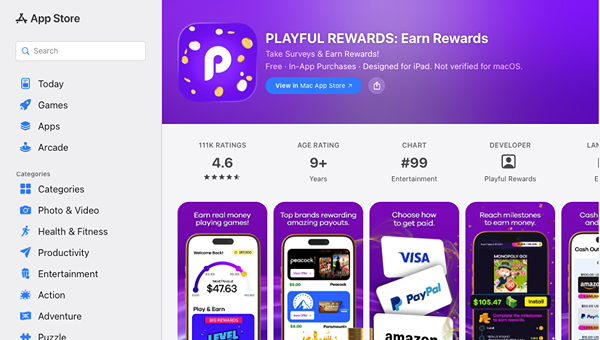
Playful Rewards is a free mobile app for iOS and Android that pays users in points for downloading and playing recommended mobile games, completing in-app milestones, and occasionally taking surveys. Points convert to gift cards or cash once you hit a redemption threshold. It runs on the same basic model as apps like Mistplay or Swagbucks — play games, earn points, cash out.
Is Playful Rewards legit or a scam?
This is where it gets genuinely concerning, and we’re not going to soften it. Truth in Advertising, an independent consumer-protection watchdog, published a dedicated investigation into Playful Rewards. A few findings from that investigation are worth knowing before you download anything:
The marketed rating doesn’t match reality. Playful Rewards’ own promotional materials cite a near-5-star Trustpilot rating based on thousands of reviews. Trustpilot’s actual current rating is under 3 stars. Trustpilot itself has placed a formal notice on the app’s page warning that Playful Rewards has been “displaying Trustpilot content incorrectly.”
Some 5-star reviews are actually complaints. The investigation found app-store reviewers who admitted they rated the app 5 stars specifically because that was the only way to get their complaint noticed — suggesting lower-starred negative reviews may not get the same visibility.
The most common complaint pattern: users report reaching a real cashout milestone, then having their account flagged as “fraudulent” or banned entirely right at the point of payout — with rewards, points, and progress wiped in the process. This shows up repeatedly across Trustpilot, the Apple App Store, and the Better Business Bureau, not as isolated incidents.
Playful Rewards’ own response, given to both TINA and the BBB, is that accounts are only flagged when the company detects “unusual behavior” consistent with cheating or hacking to defraud advertisers. The company’s owner told the BBB directly that complainants making these claims are “fraudsters” attempting to “blackmail” the company through negative reviews, and stated the company will “not respond to blackmail.”
We can’t independently verify which individual complaints are legitimate fraud attempts by users versus genuine cases of the company withholding earned rewards — but the volume and consistency of the pattern, combined with a formal watchdog investigation and a real BBB complaint history, is enough that we’re not comfortable recommending this app until that pattern changes.
Common red flags reported by users
High payout minimums. Multiple reviewers report needing 5,000–10,000 points just to reach a $5 gift card, which can take weeks of daily play to accumulate.
Points can expire. Some users report balances resetting to zero after 30–60 days of inactivity, a detail reportedly buried in the terms of service.
Slow, unhelpful support. Repeated reports of 5–7 day waits for a response, with some tickets closed without resolution.
Bans with no appeal process. The most serious pattern — accounts suspended for “suspicious activity” specifically after a redemption request, often with no clear path to dispute the decision.
Want a game/task reward app with a cleaner track record? FreeCash runs on a similar play-and-earn model, but with a $5 minimum payout and crypto withdrawal option, so you’re not locked into waiting on a single payment method. We wrote a full honest review, including the downsides: Is FreeCash legit? →
Ready to try it? Sign up for FreeCash →
FAQ
Does Playful Rewards actually pay?
Some users do report successful payouts, particularly smaller, earlier redemptions. The consistent complaint pattern is specifically around larger redemptions, where accounts are more frequently reported as flagged or banned right before payout.
Is Playful Rewards a scam?
We can’t say definitively either way. The company disputes the fraud allegations and says it only bans accounts for genuine rule violations. But the volume of similar complaints, a formal Truth in Advertising investigation, and a real BBB complaint history are enough reason to proceed with real caution rather than treat this as a normal, low-risk rewards app.
Why does Playful Rewards ban accounts?
The company states bans are reserved for detected cheating, hacking, or fraud against its advertisers. Many banned users dispute this, saying they did nothing differently from normal play before being flagged, typically right after requesting a payout.
Is there a safer alternative to Playful Rewards?
Yes — apps like FreeCash and Cash Giraffe run on a similar play-to-earn model and currently have a cleaner complaint record. None of these apps will replace real income, but they carry less risk of forfeited rewards.
The bottom line
Playful Rewards isn’t necessarily an outright scam in the sense of taking your data and giving nothing back — plenty of users do report earning and cashing out successfully, especially at lower reward tiers. But the specific, recurring pattern of accounts being flagged or banned right at the moment of a larger payout, backed by an independent watchdog investigation and a real BBB complaint record, is a genuine reason for caution. We’d rather point you toward an app with a cleaner track record than tell you this one is fine when the evidence says otherwise.
Disclosure: Laptop & Coffee is reader-supported. This post contains an affiliate link to FreeCash, which means we may earn a commission if you sign up — at no additional cost to you. We do not have an affiliate relationship with Playful Rewards, and nothing in this review was influenced by one. We only recommend platforms we have researched properly. No hype. Just truth. Sip. Click. Earn.